What would garner me more hate from the manosphere over Easter? Posting myself (a) in bed, smoking a cigarette, or (b) in a crop top, gnawing on a Cadbury bunny, chocolatey morsels falling onto my unflat, untanned abdomen?
I’d run the experiment, except I try not to smoke and – despite telling myself my little rolls are cute – I’d rather they weren’t on the Internet.
Of course, the responses wouldn’t all be negative, or from men, or related to my gender. But womanhood and smoking are on my mind every Easter. I’ll offer you a confession to explain why. It’s a sin you may not absolve me for.
Okay, deep breath: in my early twenties, I pitched a market research proposal to a tobacco company that was targeting young women. My global corporation offered me a bonus if we got the job: the clients wanted a research exec who was young and female for the market segment, preferably one who admitted to the occasional cigarette.
It wasn’t greed that got me, though; it was fear of saying no to my boss.
I quickly changed career, but carried the shame of my acquiescence and, after my cousin died of cancer a few years later, I smoked (what I promised myself was) my last cigarette at The Zoo in Brisbane’s Fortitude Valley. There, watching the band, I thanked god we lost that pitch, and told myself I’d subconsciously thrown it. Some other young woman had that job on her conscience, not me.
Yet I often think of that failed tender around Easter, because of what I learned in preparing it.
Picture this: It’s 1929 New York. You’re a young woman yearning for the simple freedoms men enjoy, such as having a cigarette in public without being called a ‘whore’ (as was the messaging then). The famous Easter parade’s happening, so you get together with friends and challenge yourselves to march and light up in front of newspaper photographers.
Like synchronised swimmers, you bravely whip out your packets and, overnight, your burning little sticks become ‘torches of freedom’; other women, inspired, flock to buy their own symbols of liberation.
But it wasn’t women who orchestrated this spectacle. It was men, and big business. Behind the Easter parade display was the ‘father of PR’, Edward Bernays, hired by the American Tobacco Company to get women to smoke cigarettes. The ‘torches of freedom’ concept came from a male psychiatrist, Dr A. A. Brill, whom Bernays engaged for advice on hacking women’s minds. The doctor, astutely, told him it was freedom women wanted; to link smoking to that.
Almost a hundred years on, smoking has little to do with freedom. But a quick skip down the Reddit rabbit hole shows what some men still think it has to do with. ‘If she smokes, she pokes’ is a disturbingly frequent phrase, with choice variations such as, ‘It’s one of the absolutes of life, if she smokes, she fucks . . ., ‘ and, ‘If she can handle a cigarette in her mouth, she can handle my d—. ‘. I suspect his size comparison was unintentional, but you get the idea.
Do you want another confession? I once got mad and almost painted a viral social media question on my front fence. One that asked women what they’d do if there were no men for a day.
I refrained, for obvious reasons. Then I had a better idea: I wrote a psychological thriller, set it in the 1990s, and had the protagonist, Dove, paint that question on the front wall of her permaculture farm on a tourist route.
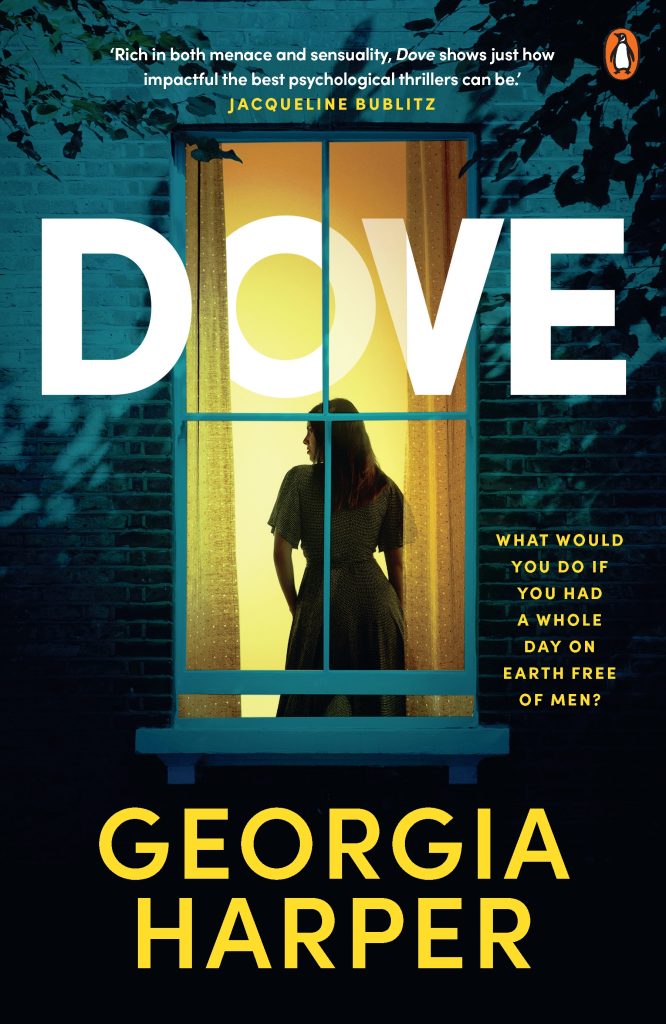
The book, by the same name, is an expression of our fears, hopes, and desires. It’s also an invitation to men for reflection and change. On a recent podcast, male crime author JP Pomare recommended Dove – which is also centred around a man, Noah, and his teen daughter, Bella – for women and men.
When I handed my advanced copy of Dove to a man for the first time – someone I care about, a father of a daughter himself – I did so with curiosity.
He held my fresh creation in large hands, examining the cover, turning it over, slowly, reading the blurb. I waited. Anticipatory. The first words out of his mouth? “You’re provoking good men with that question.”
Research suggests that some men react with aggression when they experience shame around threatened masculinity. If you’re a man, and your initial response to the question is uncomfortable, I invite you to sit with it and explore it. I often share vulnerable stories, as I did above, to show others that we all feel shame sometimes. Acknowledging this shame is the first step to freeing ourselves. But converting it to hatred, towards ourselves or others, makes it grow.
Dove flew into the world just before Easter. I won’t be posting my belly on the Internet, or smoking a cigarette. Instead, I will be opening Dove’s Wall. A virtual art installation where real people can share their answers to the ‘no men for a day’ question. Each answer a tile; each tile a brick. I hope you’ll swing by and help build the wall.
Find Dove’s Wall on Instagram @doveswall
This article was first published in Women’s Agenda on 2 April, 2026.
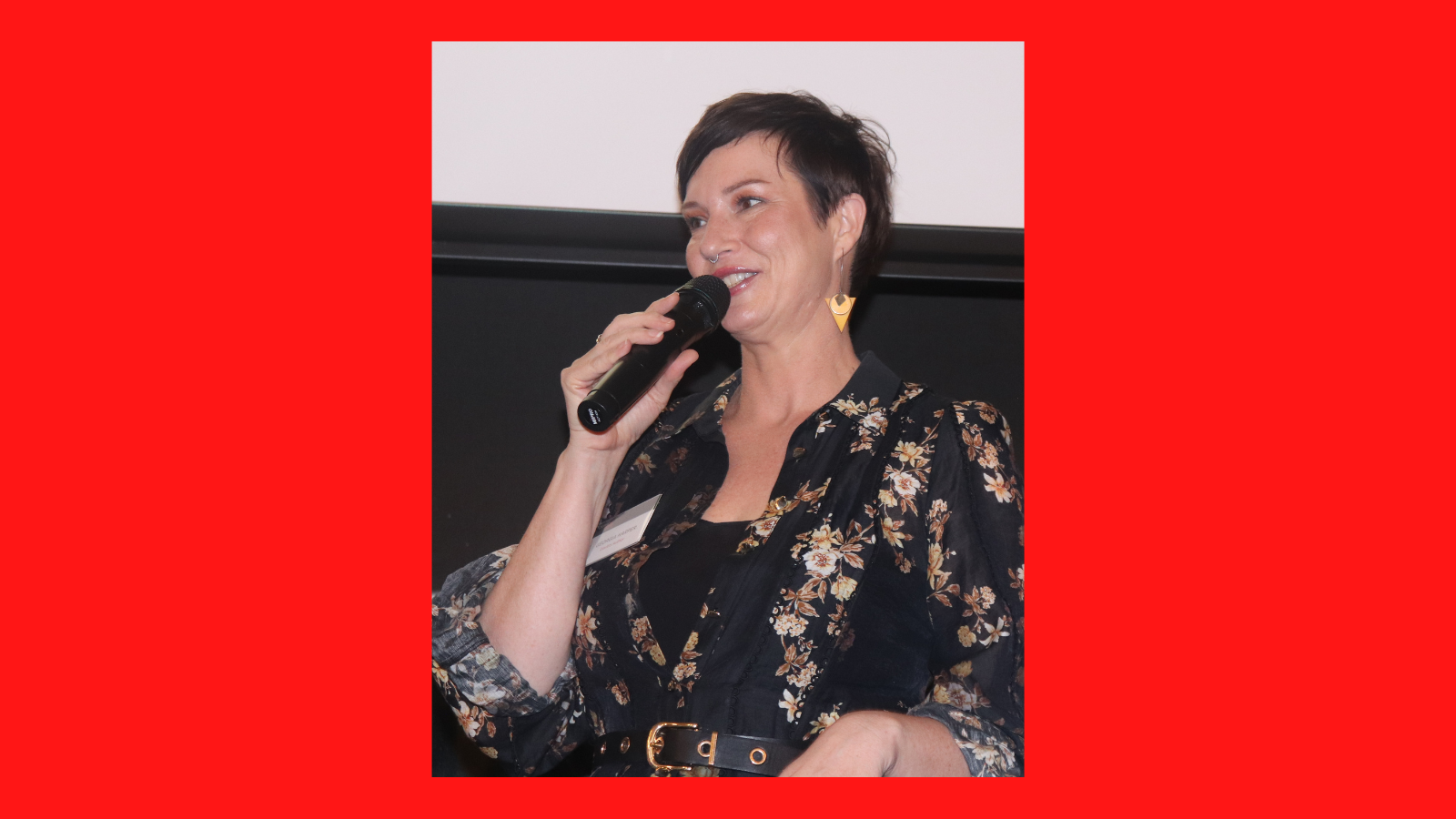
Georgia Harper is the author of What I Would Do to You, published by Penguin Random House Australia, and winner of the 2025 Davitt Award for Best Debut Crime Novel. Georgia writes on Gubbi Gubbi country, and is the author ambassador for the Sunshine Coast Hinterland Writers Festival.