The enduring power of the missing person trope: Mali Cornish
Author Mali Cornish on the enduring tropes of crime fiction and a sub-genre in its own right, the ‘missing person’ story.
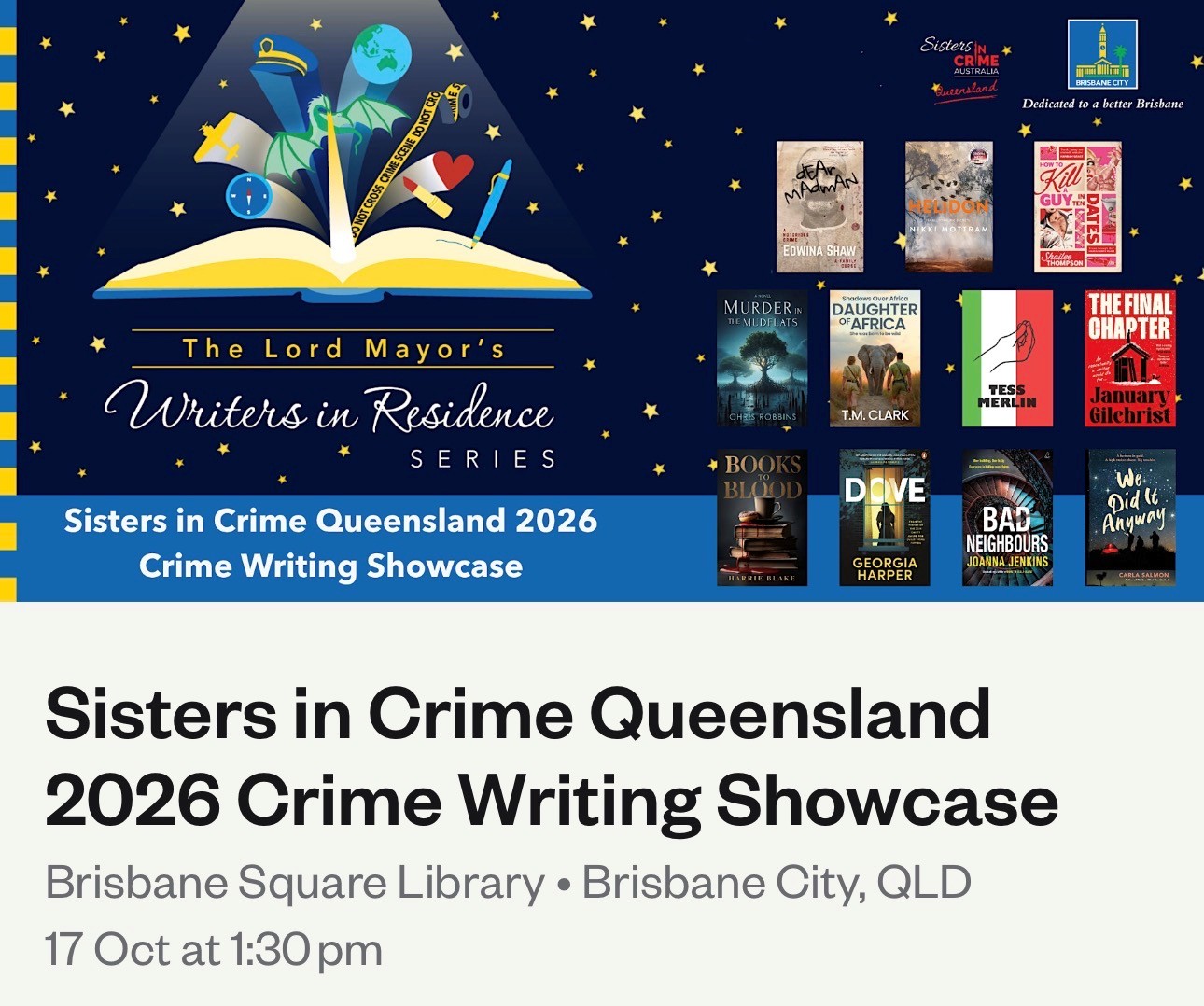
Drawing on the rich tradition of lawyers dominating crime and legal fiction are three Australian authors Rebecca Lim (The Graduate), Joanna Jenkins (Bad Neighbours), and Eve Thomson (Smother). Their investigations traverse top male-dominated law firms, an Art Deco apartment complex, and an elite school’s girls’ football team. They’ll be admitting all to host, Melbourne author, Lyn Yeowart.
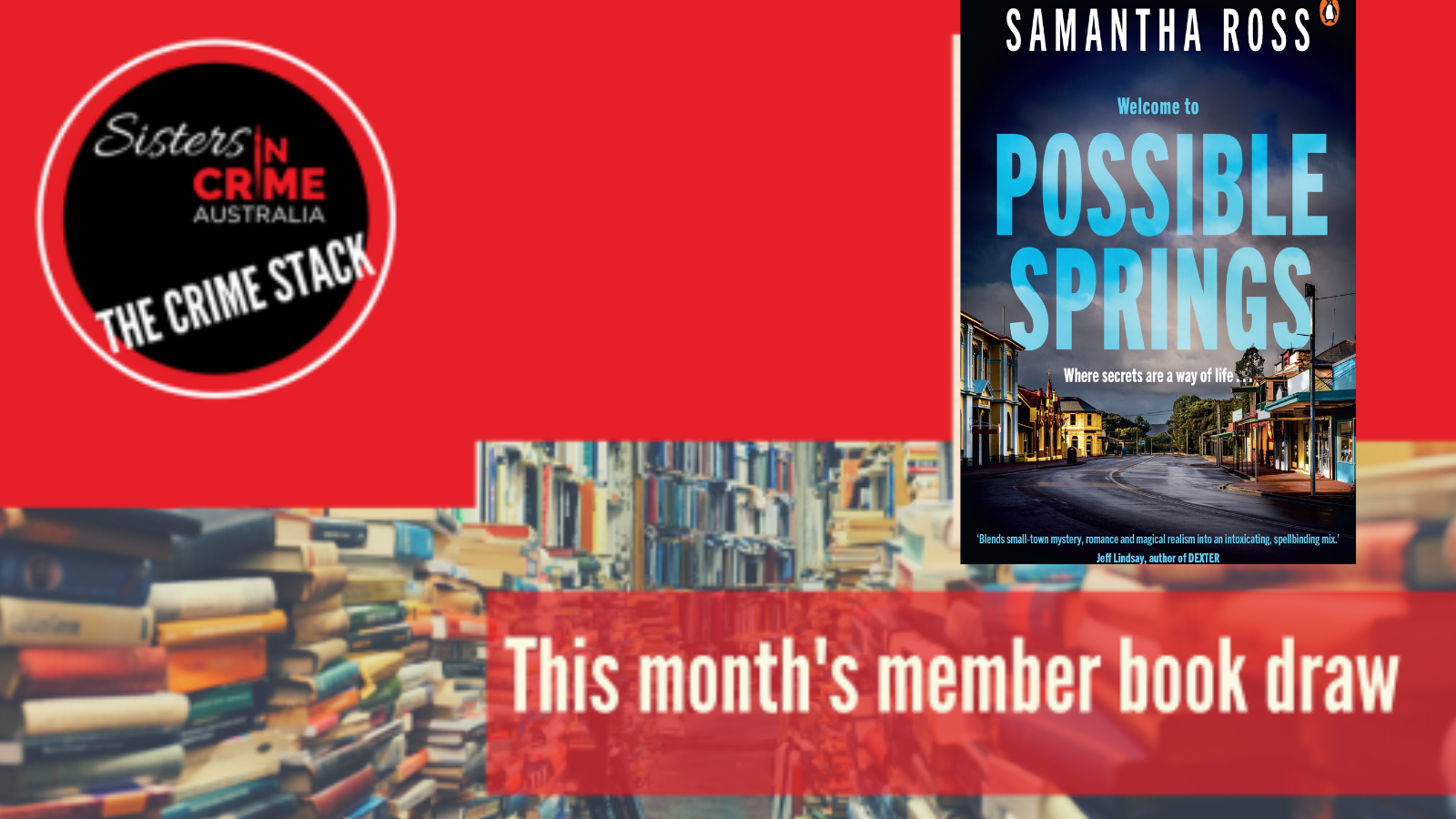
Penguin Random House is generously donating twenty copies of Possible Springs by Samantha Ross for the Crime Stack for June. Samantha is a refugee from Melbourne and now lives in Port Douglas in FNQ. Her debut novel blends small-town mystery, romance and magical realism. This is a special offer for members of Sisters in Crime. Join now and be in the running for a complimentary paperback copy of Possible Springs.
Three authors – Sarah Bailey, Sherryl Clark, and Mali Cornish. – explore the many dimensions of ‘the gone’ -the missing – with crime writer, Katherine Kovacic.
What would women do if there were no men for a day? Georgia Harper once almost painted the question on her front fence. Then, she had a better idea and decided to write a thriller and had the protagonist, Dove, paint that question on the front wall of her permaculture farm on a tourist route . . .
Whilst on the surface, Smother is a legal thriller, it is way more than that. The book looks at relationships that come in all shapes and sizes and how we need to nurture these at all stages of life. This is a must-read – an enjoyable and thought-provoking story.
Like, Follow, Die was hard to put down. A thrilling exercise of dot connecting to work out who was responsible, and for what. I was mesmerised from the first page, but the climax was so intense, I couldn’t read quickly enough. I flew through the pages, my heart pounding, cooking dinner totally forgotten. I thoroughly recommend you read Like, Follow, Die, not just for an incredible crime story, but also as a reminder. Beware.
Christine Balint began working on this novel in 2018 after finding a summary of the story in a book by American historian, Joanne Ferraro. The Royal Commission into Institutional Responses to Child Sexual Abuse had just taken place. She could not believe that in 1757, a child had had the courage to speak out and she had been believed and her abuser convicted.
Sisters in Crime and the Prahran Mechanics Institute are partnering to present a special Melbourne Rare Book Week event , Digging for Dirt – Criminal inspiration from the archives. Tara Oldfield and Lucy Sussex will be discussing the critical role that archival research plays in creating historical crime writing, both fiction and non-fiction.