“I have something to tell you, but after I tell you this something, you probably won’t want to be friends with me anymore.”
That’s how my friend, Beatrice, began a conversation with me one day. I gripped my coffee and stared at her, honestly wondering if she’d killed someone. It turned out she hadn’t, but her story did shock and anger me – and firmly planted the seed for The Hollow Girl.
She went on to tell me that when she was 15 years old, she’d ‘got herself pregnant’ (a medical miracle!), been sent to a home for unmarried mothers, and had her baby adopted. I waited to hear what she’d done that would ruin our friendship, but that was it. Nothing friendship-ruining at all, let alone murderous.
But to be pregnant and unmarried in the early 1960s was unforgivable. Her family, society, and the people ‘caring‘ for her in the home repeatedly told her she was wicked, depraved, and sinful – leaving her drowning in so much shame for over forty years that she believed even her friends would turn against her if they found out.
So it wasn’t what she had done all those years ago that shocked and angered me – it was what others had done to her in that home (a misnomer if ever there was one), particularly because she did not consent to her baby being adopted, despite signing a Consent To Adoption form. No wonder we use the term ‘forced adoptions’.
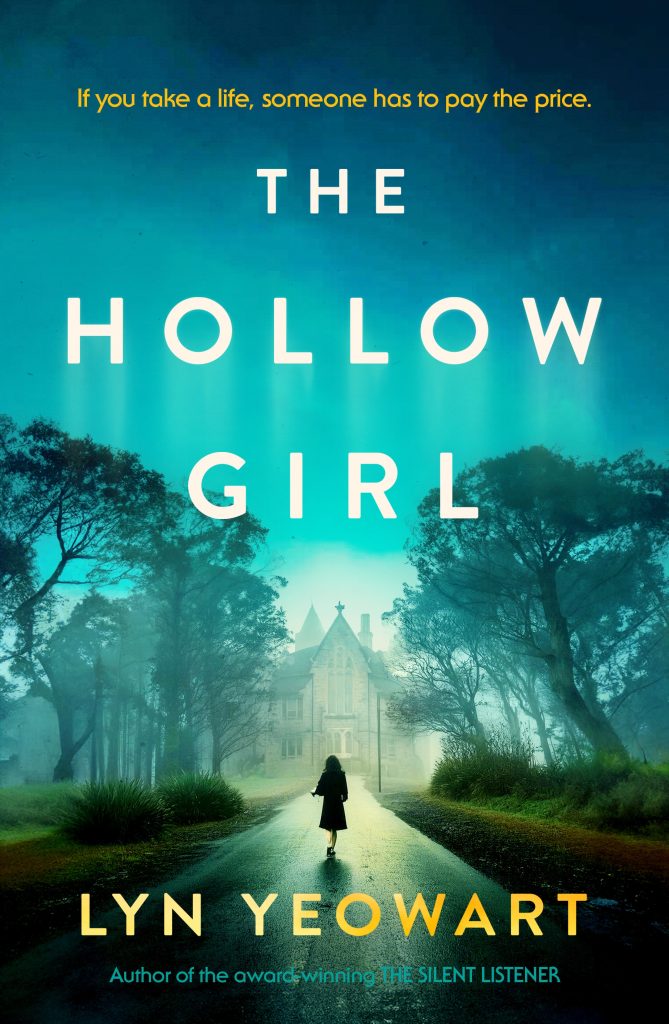
I couldn’t get her story out of my mind. . . nor the fact that I had momentarily thought she’d murdered someone. Cut to a few years later – I was searching for a good premise for my next novel when it hit me: why not merge those elements of our conversation and write about a murder in a home for unmarried mothers? The lies and manipulation Beatrice and others experienced – often sanctioned or ignored by authorities – were incredible fodder for shocking revelations. In fact, every single twist in The Hollow Girl is tightly grounded in truth.
And, of course, the rampant sexism of the era just screamed out for a feisty female detective whose boss doesn’t believe women are smart enough to solve murders. I confess I had great fun with him.
Interestingly, it seemed everyone I spoke to about what I was writing knew someone who’d been sent to ‘one of those homes’. Sometimes, someone would bravely admit it was them . . . one day, a friend told me he was one of the babies.
Maybe I shouldn’t have been surprised, as Beatrice’s story is far from unique. Through the 1950s, 60s, and 70s, an estimated 250,000 white babies in Australia were forcibly separated from their mothers – the equivalent of one baby every single day for 685 years.
Sadly, Beatrice died a few months before the manuscript was finished, but her bravery and that of many others who shared their stories remind us that speaking the truth can strengthen friendships and encourage discussions. And sometimes, it even inspires crime fiction.
More info here.