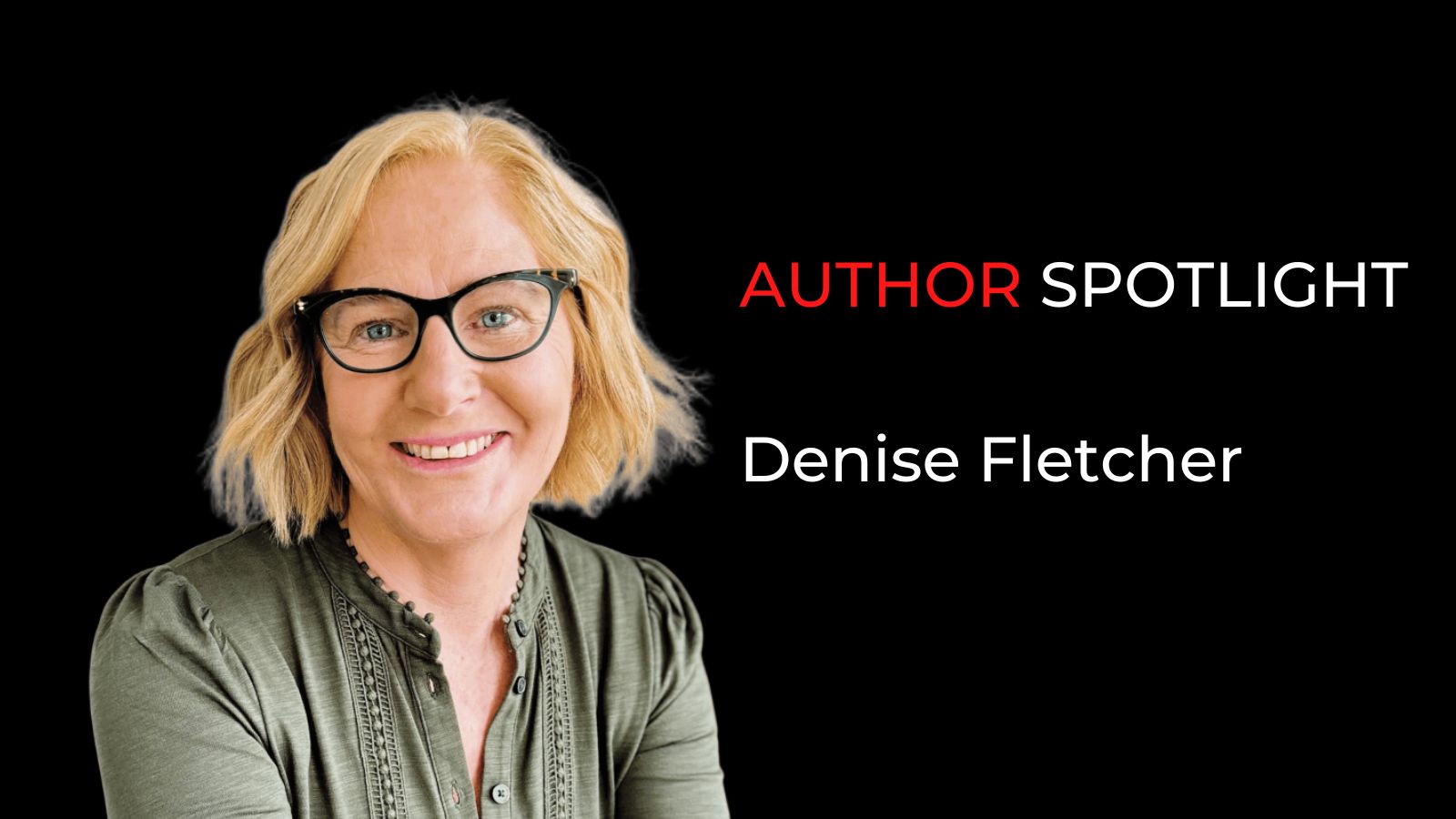
For this month’s Author Spotlight, Robyn Walton spoke to Denise Fletcher (writing as D. A. Fletcher) about her debut novel, Unspoken (Ventura Press, 2026) which draws on her time as a political staffer.
Hi Denise, and welcome to crime fiction authorship. I don’t dare ask whether you saw any fiction in the many thousands of documents you dealt with during your almost twenty-year career in Australian politics. Let’s focus on your novel, which happens to be set in inter-connected political and organised crime circles in Australia in the 2020s. What were your considerations when you chose this ‘political landscape’?
Hello Robyn, and you are probably the first not to dare to ask me about fact vs fiction in politics. Whenever it comes up, I always answer – tongue in cheek, of course – that “I spent twenty years handling communications and strategy for politicians. Writing a novel was simply a matter of adding a bit of punctuation!”
But seriously, my journey began with reading books on the craft of writing. I’m a researcher and enjoy understanding how things work. When I started thinking about writing a novel, I took the advice to write what you know, so politics made sense. Interestingly, I hadn’t read anything in this genre written by someone who had worked on the inside. I thought I could offer a unique perspective.
The organised crime thread literally landed on my desk in 2017, when the Australian Criminal Intelligence Commission released their very first national wastewater drug monitoring results. They laid bare the infiltration of organised crime throughout our society, including our most trusted institutions. The more research I did, the more I knew that was the story I wanted to tell.
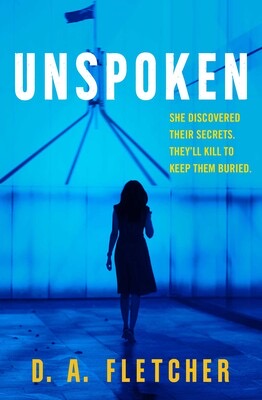
And your novel’s title: what did you have in mind when you chose it, and why did you direct attention to that?
I played around with a few working titles, and it wasn’t until I was nearing the end that Unspoken popped into my head – in the middle of the night, as these things do. The title reflects the power imbalance that exists within some large institutions, where winning is often more important than wellbeing. Politics, yes, but it’s definitely not the only workplace with a culture issue. It’s so easy to get caught up, and before long, you’re drinking the Kool-Aid. You learn very quickly who holds the power, what you can challenge and what you can’t. The title speaks to the behaviours everyone who survives within that environment understands. The Jenkins Review in 2021, which investigated workplace culture, bullying, sexual harassment, and sexual assault across federal parliamentary workplaces, reported that participants in the review described tolerating treatment they would never accept in any other workplace. It was important that I didn’t gloss over that reality.
Early in your narrative these words are spoken: “Tell me, how does an unremarkable junior staffer mastermind the downfall of her own party?” Can you tell us a little about the man posing the question, the woman he’s speaking to, and what’s been going on?
I had a lot of help with my characterisation, because I was thinking about the novel as I walked the corridors of Parliament House. I started noticing the different traits of the people who worked in this world. ‘The man’ – David Perkins – only takes positions where he can’t be challenged. Winning government is everything in politics, and he knows the party needs him, more than he needs it. That gives him a licence to behave as he wishes and to never apologise for the collateral damage he causes. Compare that to ‘the woman’ – Francis McGuire. She’s a typical political staffer, in her mid-twenties, university-educated, smart, and loyal to her boss and her party. She’s also invisible and expendable in the whole scheme of things. That sets us up for this confrontation: a middle-aged man with unchecked power looking for a scapegoat, and a young staffer whose loyalty makes her an easy target. He’s prepared to use that against her, regardless of the personal cost to her and she is powerless to do anything about it.
Francis flees to her home state, Western Australia, taking refuge from the media in her childhood home on the south-west coast. Here in 2014 Francis’ father, a school principal and anti-drugs campaigner, was killed when a truck hit his car. You’ve already touched on this in your prologue, set in Griffith (NSW), so readers will understand the WA road death wasn’t an accident. Also, older readers may be reminded of the organised murder of an anti-drugs campaigner in Griffith in the 1970s. Is it worth noting that both your fictional killing and the real-life murder happened regionally?
We are both showing our age, referencing the murder of Donald MacKay in the ‘70s, but it was where my research began. Although Unspoken is set against the backdrop of Australian politics, at its heart is a story about ordinary people who suffer at the hands of institutions far more powerful than themselves and those who try to fight back. I’ve lived in rural towns for most of my life. I’ve seen the personal cost to families and communities. And the reality is, the impact is often greater in these communities because the services and infrastructure to respond to the challenges simply aren’t there.
Francis takes a casual job, working alongside Maxi, “a disarmingly easy person to like”. If your novel reaches the screen, I can see Maxi stealing every scene she’s in. How did Maxi and her emotional support dog find their way into your imagination and your narrative?
There is no doubt Maxi and her support dog are readers’ favourites. I even got feedback that said, “Maxi for PM!” I was aware early on that Francis needed a sidekick for the story to be believable. There were challenges she was going to have to face, and she wouldn’t face them unless she had a person of strength beside her. That was Maxi’s role, and she was by far the easiest character for me to write. Her dialogue just flowed onto the page. I loved everything about her, especially her dry sense of humour.
As for the dog, I was preparing my two adult children to read the novel once I’d finished it. The non-reader said, “I’ll only read it if there’s a dog in it!” So, Maxi got a dog.
Finally, Denise, are there any other parts of your novel you especially enjoyed writing and would like to say something about?
Although I wasn’t conscious of it at the time, I’ve written a novel with very resilient women at the forefront. The most enjoyable part was reflecting on the remarkable people I’ve had the privilege of meeting during my career, many taking on insurmountable challenges, and bringing the essence of them into the story.
Thanks for introducing Sisters in Crime to Unspoken.
More info here.