Angels, Bunkers and Cannibalism – In the Eye of the Cyclone: Jane R. Miles
Christmas Eve, 1974.
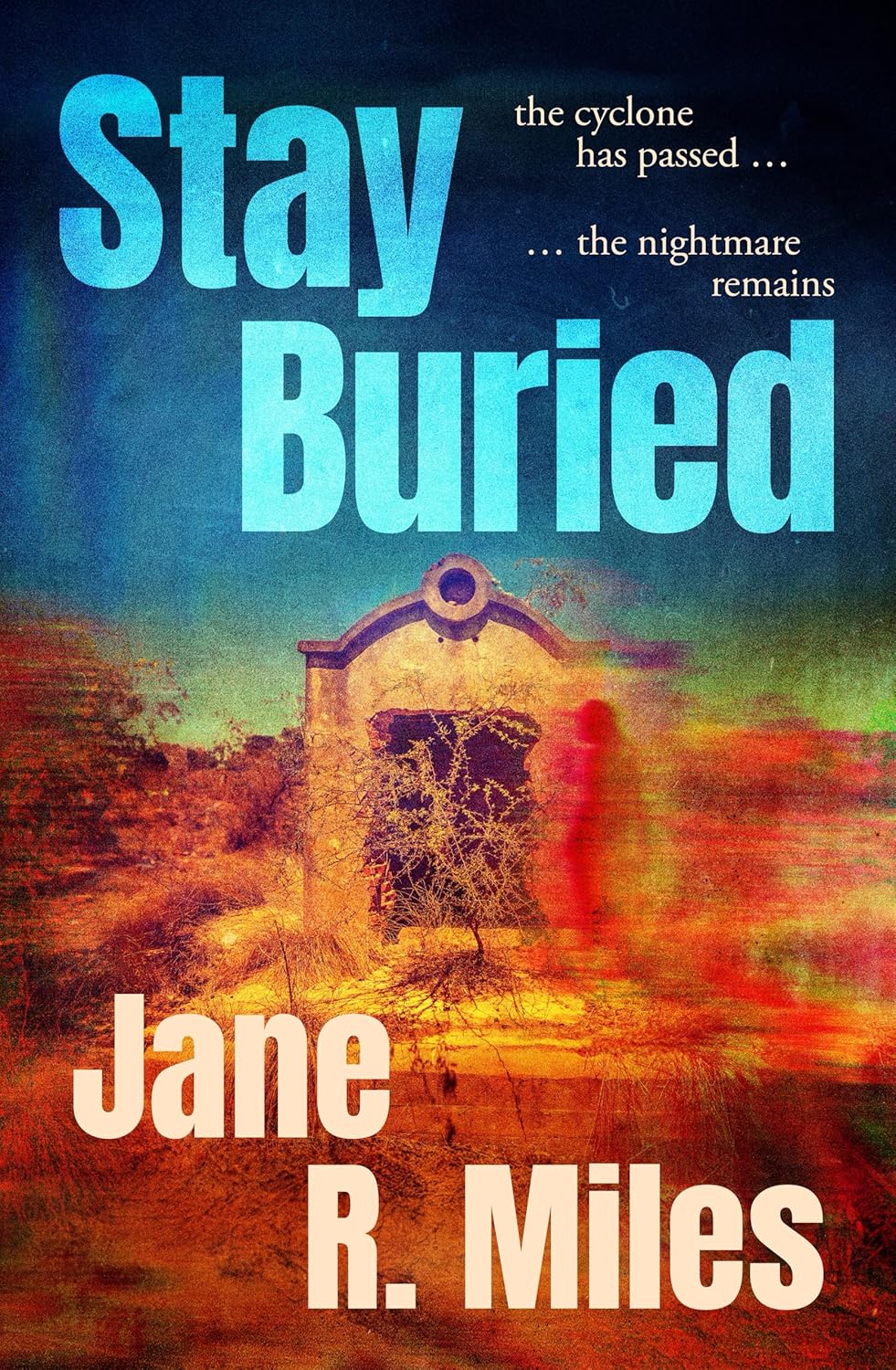
As Cyclone Tracy tears through Darwin, four girls disappear into the heart of the outback. No tracks. No bodies. No answers.
Decades later, one returns.
She claims to be one of the missing. But is she? There is no proof of who she is, only a keepsake that once belonged to another missing woman – Sally, a teen mother whose disappearance never mattered to anyone but Von, the daughter she left behind. Sally’s return rekindles the cold case, as desperate families plead for answers – and a dark mystery begins to surface.
A hidden bunker … a ghost … scratches on a concrete wall … pictures inside a View-Master … and the little girl who understood the darkness better than anyone.
Inspired by true events, Stay Buried is the darkly thrilling tale of secrets unearthed, the will to survive and a legend that refuses to die.
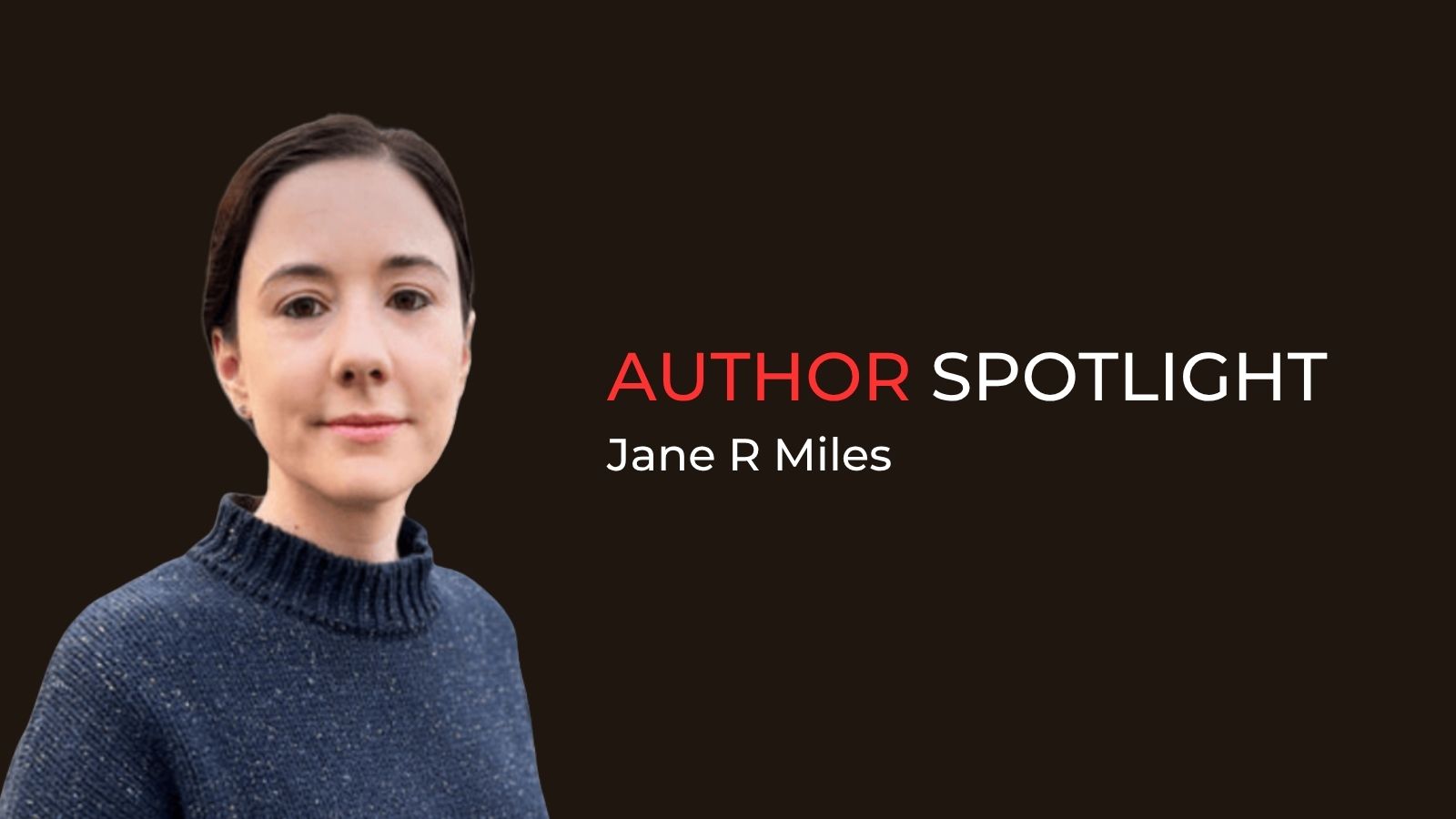
Olivia De Lesantis, cosy crime writer and Sisters in Crime Communications team member, caught up with Jane R. Miles shortly after the release of Stay Buried.
Hi Jane, I absolutely loved reading your debut crime novel, Stay Buried. One of the most intriguing things mentioned in your author bio is your career in the navy. Without revealing too much, obviously, are there elements of your career in the defence force that have loaned themselves to your writing process or the subject matter of Stay Buried?
Hi Olivia, thank you! I was posted in Darwin in 2006. Elements of the setting and characterisations in Stay Buried are based on my recollections of the place and people. I encountered people from all walks of life, all who shared the same core reason to be in the navy: to discover something about themselves. Meeting all sorts of different people helped with characterisation. I really didn’t want to sound like I was making fun of someone. I was also conscious of showing without telling in relation to the catalyst of the cyclone and the actions of a serial killer. The main story was the reactions of people; Darwin represents a bunker in itself. You can’t have an atmospheric story without having the environment as well – and I chose very Australian locations.
It’s striking that Lisa-Marie and Von are both the youngest of their groups, despite the thirty years separating them, and they both face a struggle to fit in. How did you manage writing their individual voices and perspectives? Was there a conscious decision to draw a parallel between them?
I utilised mirroring to show the contrast. Originally, the entire story was told solely from the perspective of Lisa-Marie, but it was too dark. We needed a breath of fresh air from Von’s timeline, and having balanced her perspective with Lisa-Marie’s provides a sense of relief. Von’s perspective provides stakes and reminds us of the people who are left behind when someone goes missing; who survives, what really happened. Whilst I was developing the voice, Lisa-Marie was very annoying – her character was always there, it just required some fine-tuning. You rally behind the youngest, there’s hope in children. Without her they would have lost their hope long ago. In writing the group of girls, I was aware that the older girls (Angie, Brenda, Miranda) are teens who are thinking about the future they’re giving up whereas a nine-year-old is living in the now. Lisa’s fallback is her imagination, and sometimes imagination can be a dangerous thing to have, as we explore when she begins to see the ghost in the bunker.
Sally was the most intriguing character for me, and perhaps the heart of the story. Every time we returned to the bunker, we saw another angle of her; her survival and coping mechanisms. Writing and researching trauma is an incredibly challenging subject to engage with – how did you go about doing that?
I was focused on emotional truth – you can’t speak for anybody else’s story. Sally is the only true angel; she doesn’t do the unthinkable. She’s the purest of the group. She’s the voice of reason throughout it all, her reactions are the most normalised. In survival you resort to your basic instincts; fight, flight or freeze. The whole novel needs to feel like a logical conclusion to the ending . . . cannibalism requires preamble!
The theme of motherhood, and how far a mother would go to protect her child, is another central element of Stay Buried. Being a mother juxtaposes Sally with the other girls throughout the book – did writing Sally help you write Von, or vice versa? How did the bond between them translate to the page when they were separated by ambiguous loss?
I had Sally originally as a standalone, not Von. There are definitely parallels between the two of them, they have similar ways of dealing with situations. The story was not meant to be a reveal of who the missing woman was, rather in how secrets can prevent justice from being exacted. You have to stay in the now, you can’t write like you know the ending. A book is just a kaleidoscope of things and feelings that you have, you leave a part of yourself on the page. This book has a hell of a lot of heart.
‘That was the day when Von first learned there was a right way and a wrong way to go missing’ (p. 5). Early on it’s established that Sally isn’t regarded as an Angel because she’s a sex worker – do you think the novel speaks to a broader issue in the way the media only invests time into missing women whom it deems palatable and worthy?
It’s a cliche, not that anything gets done about it. There were hundreds of unknown missing women at the time of the cyclone, and you have to fit the criteria in order to receive coverage. A select group of descriptions, the smart one, the young woman, the one that was about to get married; these are stereotypes. These characters are more complicated than that. They don’t just attempt to forget Sally but push her story down. In this story, it’s important for the surrounding characters to feel like they’ve pushed another down to get their story a bit higher. I believe people are a collection of things, they’re not simple. How we feel about crime prosecution is dictated by trusting the process, and that’s where the complexity of trusting authority is examined – the Chief Commissioner is looking to exclude victims, he’s immediately skeptical.
‘These people want to live in their own world and pretend they’re open to finding the truth, but misery is everything to them. They’d be nothing without it.’ (Peter, p. 56). The conclusion of the novel draws around the importance of the truth, even when it jeopardises everything that someone knows and holds dear. How did you engage with the lived experiences of families waiting for loved ones to return and holding out hope?
I wanted to place emphasis on the people that survived, not the motives or notoriety of the perpetrator. Angels are theepitome of who Darwin was before the cyclone. It’s scary to be so logical about something so horrible. The bunkerreveals the truth of what everyone is thinking and feeling.
You mentioned drawing inspiration from post-Tracy Darwin when you were stationed there. What particularly drew this story out for you?
I saw a nefarious bunker – it was so far off the road. I guess you put two and two together, and the idea for the book came from there.
What is the most important thing about Stay Buried for you?
Parallels have been drawn between writing the novel in lockdown and the claustrophobia of the bunker. When you get to a certain age, there’s a lot of things you tell yourself, and a novel is a great way to set it. I stopped journalling when I started writing the novel. I wrote it for myself, I got feedback along the way and I didn’t set out to get published. My goal was to always try to improve as a writer. My first thought when I saw it on a shelf was to cover it up. This book is a time capsule of where I was as a writer and a person at that time.
Thank you so much for your time and your answers, Jane. I cannot wait to read what you have in store next.
Stay Buried (HarperCollins Australia) is OUT NOW, so make sure to grab your copy. Connect with Jane via Instagram. Follow Sisters in Crime on Instagram and Facebook for more fabulous content from your favourite Australian women in crime (writing). You can also connect with Olivia via her Instagram handle.