
Not long after I started to write I was introduced to Dorothy Porter’s verse novels. As a very busy mother of two who was also working and studying, I have to admit that all that white space on the page was incredibly inviting. The novels took hours to read as opposed to days, and yet despite having so few words they were complete, and the language, the writing, was stunning and playful. I was hooked and even back then I knew it was something I wanted to try myself.
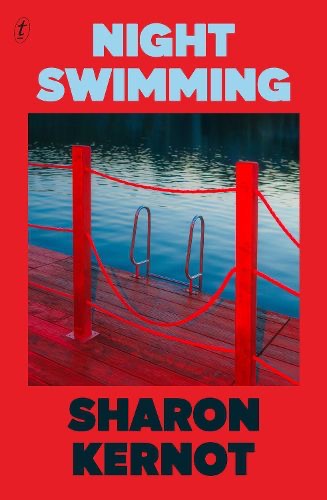
That was over 20 years ago and since then I’ve written three novels in verse. My latest, Night Swimming, is a psychological thriller about insomniac January Clare Coleson who suddenly encounters a man from her past, a man she believes is responsible for the death of her best friend, Julie, who drowned at the age of 15.
The idea for the story came to me years ago when I unexpectedly crossed paths with someone from my past. I wrote a short story about a woman called Clare who began stalking this man to find answers, but it didn’t quite work. The narrative felt too linear, and the character and her back story were underdeveloped. It needed more. And so, I set it aside.
A few years later I tried again, this time as a novel. I thought a novel might allow me time to develop the story, to add mystery, twists and turns and further complications. To get closer to the character I wrote it in a stream-of-consciousness style, and although this worked to some degree, I felt it wouldbecome tedious over time. And so once again, I put it away.
But I still liked the idea and so fast forward a few more years I decided to try once more – this time in verse. And as soon as I started writing, the story and characters came to life. Suddenly, I had a voice. I had not just Clare, but January Clare Coleson, a highly dysfunctional insomniac with a backstory that just kept unfolding.
The verse worked. The short, punchy poems allowed me to move the story along at a fast pace, while the imagery, the compression of language, the white space, and the gaps between stanzas and poems created intrigue and mystery. Also, I loved the idea that the poems act like little scenes that connect the story in a fragmented way that mirrors January’s fractured experience.
Writing in free verse allows room for playfulness and experimentation while also remaining highly accessible even for the most poetry-resistant reader. But it’s not an easy form to work in. There’s a constant balancing act between poetic and narrative demands.
On top of that, while poetry asks for pause and reflection, thrillers demand pace, tension and momentum. Consequently, I was always mindful of keeping the stakes high and the language stripped right back to keep the story moving.
I’ve read a lot of verse novels since reading Dorothy Porter, but it was her novels that first showed mehow white space and compression of language can add intrigue and tension. With Night Swimming, I returned to those ideas again and again, trusting fragmentation, silence and compression to carry both the psychological tension and the emotional life of the story.
More info here.