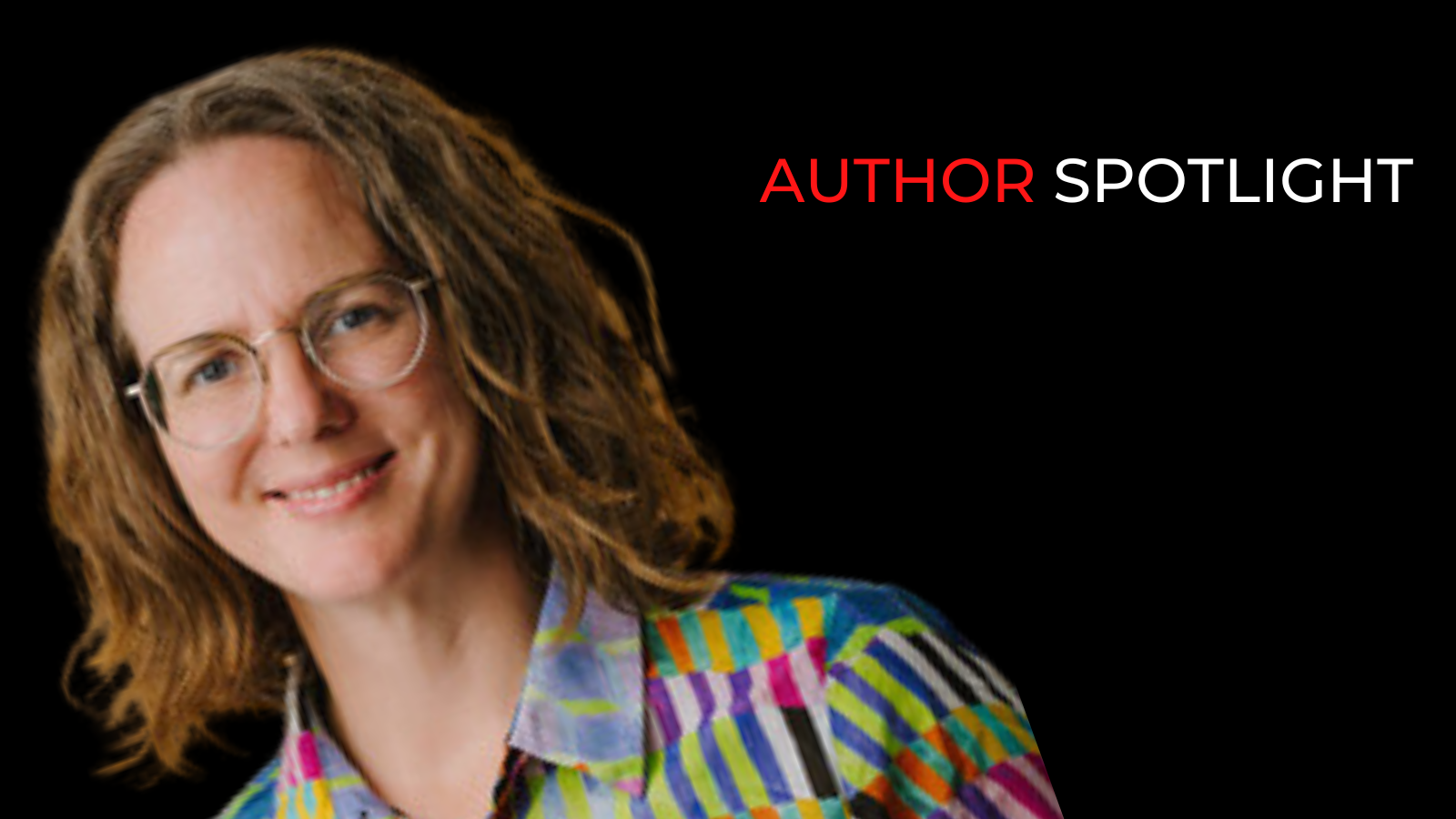
For this month’s Author Spotlight, Narrelle M. Harris spoke to Melbourne librarian (and mother), Penny Tangey, about her first adult novel, What Rhymes with Murder?
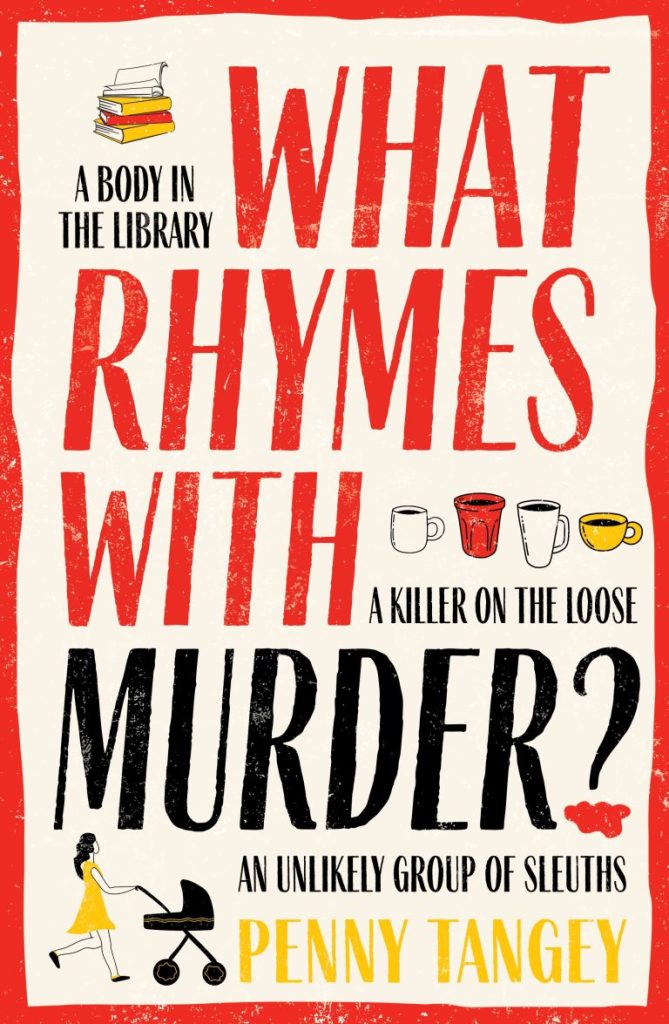
Your debut adult novel begins classically with a body in the library, but it’s otherwise non-traditional with its amateur sleuth, Frida, who is a new mother dealing with severe post-natal anxiety. How did Frida come about as your protagonist?
When I had a little baby, I found myself out and about in the community. I would notice people and events in my neighbourhood that I would previously have missed or not taken an interest in. I thought this was a good scenario for an amateur detective. Frida is recovering from post-natal mental health issues, and she connects with other people in her community through investigating a crime.
We rarely see parents of infants as sleuths, seeking clues while sleep-deprived, breastfeeding and changing nappies, presumably because people may believe that new mums aren’t able to do both, or at least shouldn’t be involved. You address some of those ideas, but basically – is this a sideways look at how people view the capabilities of new mums?
I’m definitely not saying new parents should be doing more! Parents’ capacity depends on what style of baby they have, and on their other work and caring responsibilities. Having said that, looking after kids can be very repetitive and even a little dull, so after the initial baby bubble period, I think parents often want and benefit from outside interests. Usually, they don’t start solving crimes, but there are lots of other options.
Motherhood is a central theme in the story: new mothers, the struggle some women have to become mothers, miscarriages, the choice not to be a mother, or to control when that happens. What prompted you to explore this theme in such breadth?
It was partly inspired by the setting of the book. Many of the pivotal events that led to reproductive freedom rights in Australia happened in East Melbourne, and I’m very interested in that history. I also think that becoming a mother and motherhood is very complex and individual, and I wanted to represent that in the book.
What were your biggest challenges in exploring this theme? What were your favourite parts of it?
The biggest challenge was not wanting to upset anyone, which is, of course, impossible, and I’m sure I’ve failed. New parents make lots of decisions related to their babies, and they really want to make the right ones. People can be very sensitive about aspects of parenting, and it’s very easy to step on delicate topics without intending to. For this reason, I tried hard not to present Frida and Ben’s parenting as the ‘correct’ way to look after a baby. I also acknowledge that some people who have been through infertility or pregnancy loss might not want to read the book.
Your East Melbourne setting is vivid, and I recognised elements of the library, the streets, and the setting. What was your approach to capturing the essence of the place while slightly fictionalising it for dramatic purposes?
Apparently, some people in East Melbourne aren’t happy about the book fictionalising the suburb. I can see why it might be annoying if you tried to map the action and places onto the real East Melbourne. My reason for changing landmarks and locations was related to privacy, but also to be clear that this is fiction. The cafe might be similar to a café in East Melbourne, but it isn’t the same place, and neither are the characters. I hope I captured the vibe and history of East Melbourne, but I’m not pretending the book is a perfect snapshot of the suburb. I’d love it if What Rhymes with Murder? inspired people to take an interest in East Melbourne history and architecture. For up-to-date information on East Melbourne’s streetscape, the East Melbourne Historical Society has some great resources.
You’ve previously written award-winning children’s books. The late Diana Wynne Jones wrote for both audiences, too, and was quoted as saying that adults had to be regularly reminded of what was going on. (Bookbrowse.com) How different or difficult was it to write a book for adults?
Kids’ books are shorter, but not necessarily less difficult to write, and certainly quite emotionally draining. I feel a big responsibility to the audience because I remember how formative reading was for me as a kid. I primarily write contemporary, realistic fiction for upper primary school kids, and these books feel a bit grittier than What Rhymes with Murder? One big difference is the endings. In my kids’ books, I leave a lot of questions unanswered and open to interpretation. In cosy crime, it’s much more important to make sure everything is solved and resolved (with the possibility of the characters coming back for a sequel).
More info here.