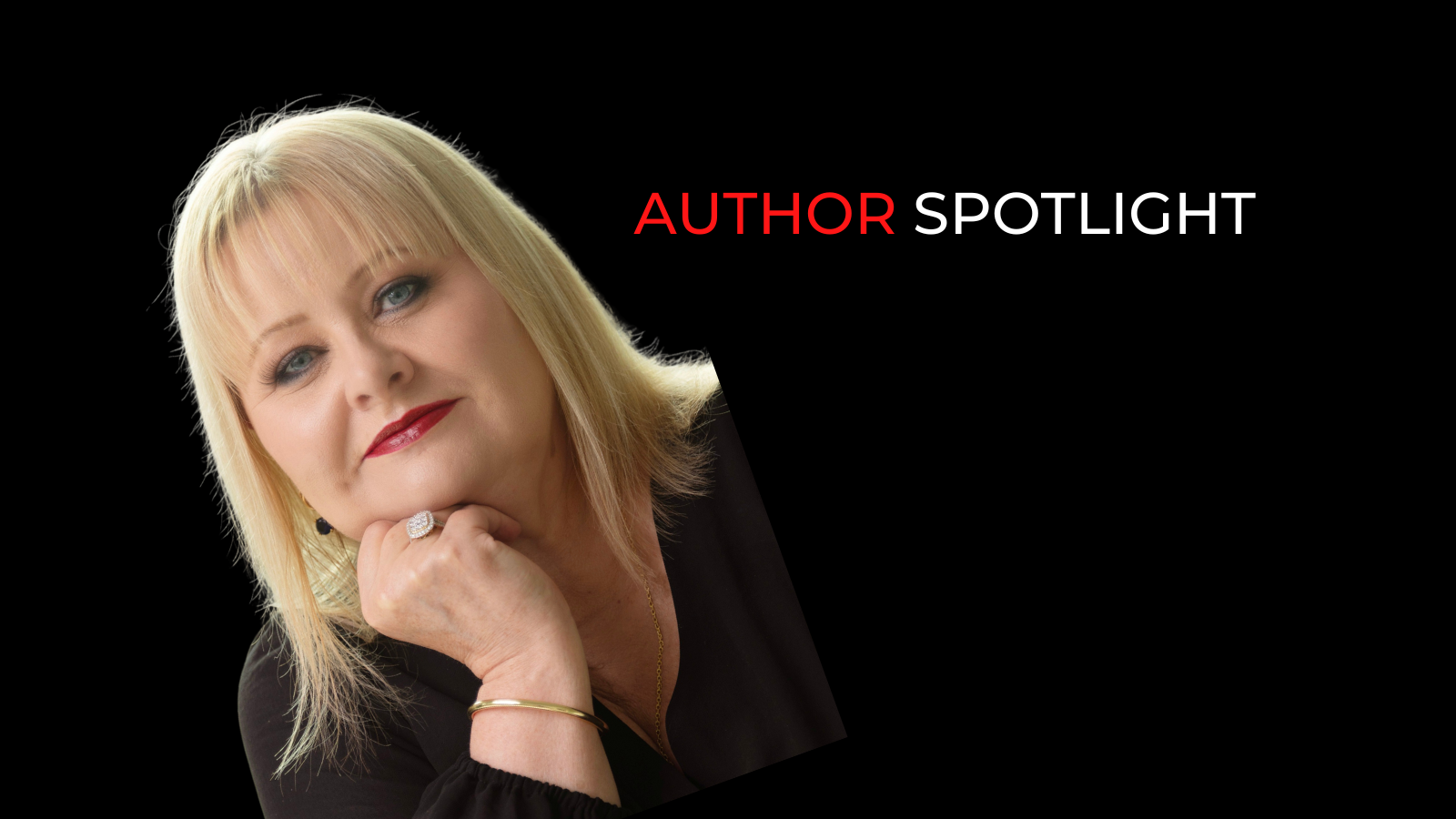
Vikki Petraitis announced herself to the Australian writing landscape 32 years ago when she published her first true crime book, The Phillip Island Murder, co-written with Paul Daley. Since then, she’s notched up 18 true crime books, several podcasts that have reached millions of people, and she now has the right to be called Dr Petraitis, having earned her PhD in Philosophy (Creative Writing).
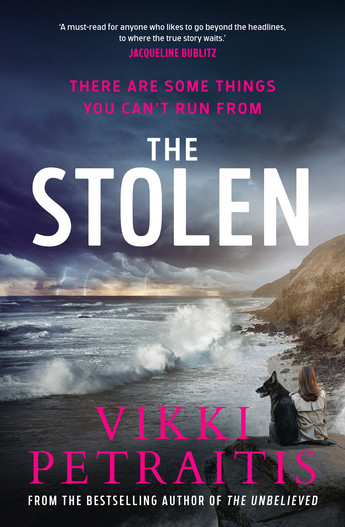
Somehow in the midst of this, Vikki’s childhood dream to write fiction never went away, and in 2022, that dream was realised when she was the inaugural winner of the Allen & Unwin Crime Fiction prize for her debut novel, The Unbelieved. The sequel, The Stolen, was released in 2025.
Next year, Dustfall, a television series based on The Unbelieved, screens on the ABC next year – and it stars the superlative Anna Torv.
Vikki spoke to Ruth Wykes, Sisters in Crime’s review editor, about the twists and turns of her career.
Did you feel ‘second book’ pressure when you wrote The Stolen?
I didn’t really because the publisher didn’t ask for it, so what was really interesting was that I started writing this before The Unbelieved came out. I read an article in the paper about a historic kidnapping, and I went, “Oh, my goodness, I wanted to help her”.
I just started writing it, and I think for me, writing is always about, I can’t not do it. And I was at school one day when it hit me. I’m not used to knowing where the ideas come from because when you write non-fiction, the stories are all there.
But this one was, “That’s the story. I need to write this story.”
Why a missing baby?
The historical case was about the missing baby, but I think, too, that a baby is the most vulnerable of victims. And it creates a conundrum for the reader. If the person who took the baby is then out of the picture, if they’ve been located but the baby hasn’t, then all we are left with is the hope that the baby has, in fact, been kidnapped. The baby can’t survive on its own.
Without giving anything away, you certainly came out of left field with the drugs your character used. Where on earth did you come up with that?
I’ve got a contact, a pharmacist, she’s gorgeous . . . and I’ll just say things like, “Quick question, what might be the example of a drug that could prove fatal, but would be easy to get?”
Does being a true crime writer influence your fiction?
I always wanted my books to be something that professionals could pick up, like police or people who work in coronial services, and go, yeah, that’s right.
How do you compartmentalise fiction writing from non-fiction and podcasts? They’re so different from each other.
I don’t think I do, but maybe you don’t see it as a reader.
For example, when we see the spotlight on the family, when the baby’s missing, and Antigone was to come the next day, and the [distraught mother’s] parents are there, all the washing is folded, and everything’s clean. The dad’s going, “Do you want a cup of tea?” or they put a cup of tea down and didn’t even ask for you to say yes.
And that frantic cleaning is directly from a description that I got from a cousin [of one of the Frankston serial killer victims], who told me that when Debbie Fream, the second Frankston victim, went missing, that house was spotless because “none of us could rest”.
You would never think of that. If you didn’t hear someone say that, you would never just go, “I bet the house is extra clean.”
And, so, these are the insights that I gain from people – and also the absolute restlessness [they experience]. I think there’s a line that goes: there’s nothing worse than being poised for action and being told to stay still.
Was there a theme that drove you in the development of the characters in The Stolen?
I wanted this book to be really about mothers, because the first book was about fathers and sons.
Antigone is fairly solitary, and she’s on the farm alone with her dog, Waffles. I wanted in this book to explore the question of what she like with family? And I wanted to show that I love the intergenerational wisdom of women.
You know that trope, Ruth, that you see a lot in on TV, that trope of the doddery old woman. A woman gets doddery or ends up losing her marbles, but women are wise, and that wisdom was what I wanted to highlight.
I wanted to show men in sharp relief to what Antigone’s like with her mum and nan.
And I wanted there to be no intergenerational jealousy. I just wanted them to be like normal people.
I think it’s so important to present women as normal, you know.
And normal is a really weird word to say, but just to present positive stuff about women and not have to have the main character who’s drunk or who’s got some really deep secret all the time.
Because I don’t know, there’s a solidarity that we find in women all the time.
There are so many novels where there’s bitchiness and rivalry.
You’re busy with podcasts that you and Emily Webb have recorded, there’s a third Antigone book in the works, and a huge non-fiction book that will soon be released into the wild.
For Emily and I, that took us a year and a half to do those 26 episodes and I’d written 200,000 words of script. It was just so much work.
I’m just about to sign a new contract with an international publisher, and they wanted the Phillip Island book. And I’ve been rewriting it.
Me as a woman, looking at this crime and just trying to get men to study what’s wrong with it and to look at it. As an act of frustration, we have applied to the coroner. That took two years for him to say, “No, you can’t have any files.”
We applied to the police, with new, really big new evidence, and they’re just like, “The case is currently inactive, if it’s ever active, we’ll make a note for you.”
Is the Phillip Island case the one that haunts you?
Yeah, yeah. It’s the one. It haunts me. It won’t let me go.
Every time I try, I move on, like there was my first book and, you know, you write it and then all these books later, it still comes up.
And then I did the podcast. We got an avalanche of information from that, and then it was on Under Investigation and got an avalanche of information from that. And it’s kind of like, well, what do we do with this information? Police won’t look at it. And the coroner won’t look at it.
So, I think this book . . . it’s like nothing I’ve ever written before.
One last question. You’re a multi-award-winning author, widely respected for your work, and now you’re an award-winning writer of fiction. How does that compare?
It means so much to me that my peers and Sisters in Crime and, you know… When I won the Reader’s Choice [2024 Davitt Awards], that was a pinnacle for me because it’s like my peers and my readers and my pals really liked it, and I just thought that was amazing.
More info here.