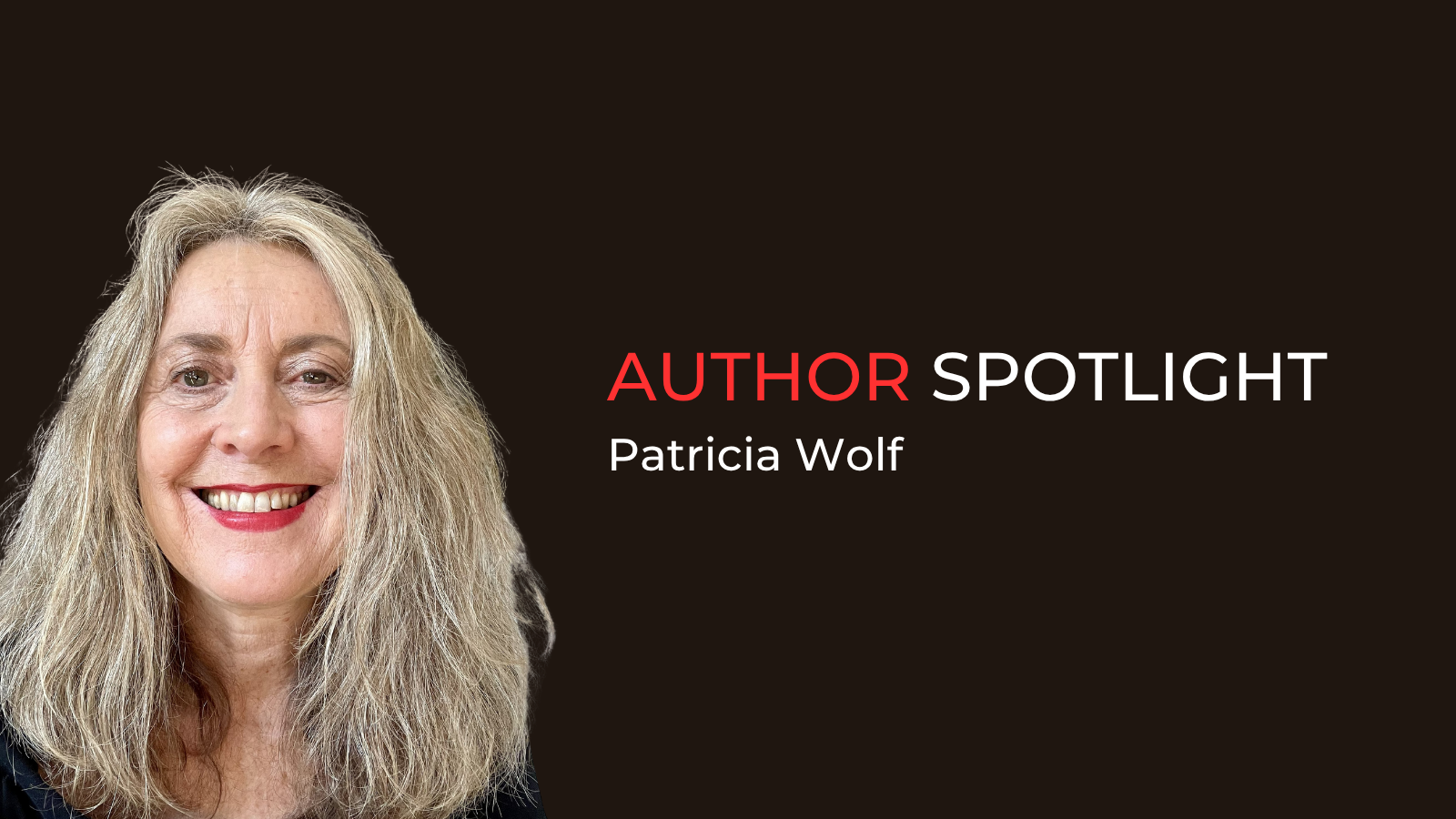
Berlin-based author, Patricia Wolf, is on a roll, having produced five outstanding crime novels since 2023. Berlin is a long way from Mt Isa where she grew up, but communicating with her fans via Instagram helps, she tells Robyn Walton.
Hi Patricia, Hero is the fifth instalment in your Australian police investigation series starring Lucas Walker. As you’re based in Berlin, has that helped you build an international fan base for these Walker thrillers?
Hi Robyn, nice to (virtually!) chat with you. That’s an interesting question. I’m not sure how much being based in Berlin has done to promote the series internationally. I lived and workedin London for a long time, though, and have a lot of professional contacts there, including my agent and my British publisher. I think they’ve probably done the most in terms of giving me an international audience. (The main markets for my books are Australia, followed by the UK, and the US and Canada.)
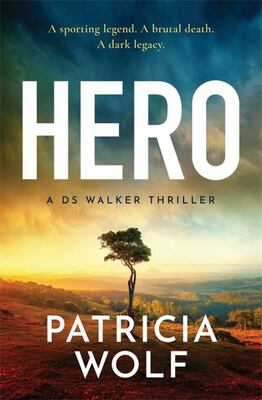
There is a German translation of the first two books (Outback and Paradise) but I think that’s happened because Germans love Australia, and the outback in particular, and because the series has German characters. In Outback, two German backpackers go missing and one of them has a sister who is a cop. She’s called Barbara Guerra, and Lucas Walker is in love with her though he doesn’t want to acknowledge it. Barbara’s in all the books and the German audience (along with a lot of Aussie readers) like her a lot.
The e-book has been your publishers’ preferred format for the series. However, I note that in Australia we’re also offered the books in print, and that’s how I’ve read them. Does print make a difference here?
My UK publisher (Embla Books) is focused on the e-book format and the books aren’t widely available in print in the UK, so I’m super happy to see the series in bookstores and libraries in Australia. I love physical books and seeing one with my name written on the front cover is honestly a dream come true! I think having the books in print does make a difference. It’s helped me build a bigger profile in Australia – readers see them in stores, at airports, in libraries and see other people reading them, which helps the word spread. Having said that, I think e-books and audio books are important, too. I grew up in outback Queensland, well before the internet or e-books were available, and it was often hard to find new books. I think I read every book in my local library, and I would have been stoked to have access to a huge online selection of titles. So, I’m happy that the series is available in all formats.
I admire your clean, straightforward prose. Do you simply like to write your fiction like this, or does it make translating easier?
Thank you! I’ve been a journalist, mostly writing for newspapers, for almost 20 years and that teaches you to write clearly and succinctly – editors will cut flowery prose in a heartbeat. I think that experience probably migrated to my fiction. I’ve also always admired authors like Cormac McCarthy and Kazuo Ishiguro, who have a simple, stripped-down approach, so I was probably trying to emulate that kind of writing, too. I always dreamed the books would be published but I honestly never planned for translation. And I think some of the dialogue, the Aussie slang and accent, might be quite difficult to translate, though they’ve done a great job in the German version.
Let’s introduce a couple of your plot strands. In Queensland, they start the day early. Around 6 am, in a (fictitious) inland town, a young man is found hanging from a high branch in a park. Walker and his young partner, Vinh, are quickly on the scene. No one local recognises the man. A retired policeman tells Walker about a similar unidentified body in the district four years earlier. As Walker thinks: “The chances of two cases as similar as these happening by coincidence in a small country town like Katima are vanishingly small.” Anything you’d like to tell us about what you’ve learned regarding pacing and structuring choices?
In terms of pace, one thing I’ve learned is that you need to hit the ground running. I try to drop readers into the middle of the action, get them hooked right from the start, before slowing it slightly for backstory or character development. In terms of structuring, I try to make sure there are significant beats of action throughout the book so that readers are constantly thinking ‘oh no, now what’. Building and maintaining tension is challenging and it’s something that I work on a lot with my editor. She’s very good at spotting the moments where tension is lagging and needs to ratchet up a notch or two.
Four mornings later there’s a gruesome body find in one of the luxurious houses on the Annabel Downs cattle station outside Katima. The dead man is Caden Conroy, the ‘hero’, greatest Australian fast bowler in generations. By 1 pm, a helicopter containing murder squad detectives from Brisbane has landed, with more to follow, and Walker and Vinh are off the case. We readers are entering the world of international sports business, gambling, and their influence at high levels. Any comments?
Perhaps it’s my journalism background again but I’m always interested in what’s happening in the real world and I like to investigate some of these themes in my books. In Outback it was methamphetamine trafficking to rural communities; in Hero it’s sports gambling, which has been in the news a lot recently and which, I think, has the potential to be a corrupting influence. I was interested in exploring that theme a little.
Background threads take us to Walker’s nearby hometown, where there is anxiety about the welfare of his niece, and to Walker’s growing friendship with coffee van vendor Charli, who’s fearful Walker isn’t over his relationship with Barbara, a German police officer. How do you feel about writing these more intimate sections of your novels?
Honestly, I’m not good at it. I always say I prefer writing about cold dead bodies rather than hot passionate living ones. But as the series has developed and Walker has become a more rounded character, it’s inevitable that some relationship elements have come up. I’m very interested in exploring the role of family, so writing about Walker’s relationship with his Grandma, cousins and sister came more naturally. But maybe I’m not very romantic, because I find the intimate scenes harder to write!
Is there anything more you’d like to say to Australian crime readers and writers?
Aussie readers are fantastically supportive, and I appreciate that so much. Whenever I meet readers, in real life or online, I get such great feedback and encouragement. It really motivates me to keep writing. Readers should never underestimate how important they are – writers couldn’t and wouldn’t do it without you! I also think we’re in the middle of an absolute explosion of fantastic Australian crime fiction. I’m always discovering new authors and amazing new books. From what I can see from afar, it’s a super supportive crime writing eco-system, too – with organisations like Sisters in Crime helping grow and develop Aussie writers. I’m sad I’m not closer to home to be a bigger part of it, but I love making virtual connections via Instagram and of course, with interviews like this and online events.
Thanks for your responses, Patricia.
My pleasure! Thanks for including me.
More info here.